The future of living is not shaped solely by new architecture, modern furnishings and attractive locations. It begins much earlier – with the choice of materials, the construction method and careful consideration of the kind of home we want to create for future generations.
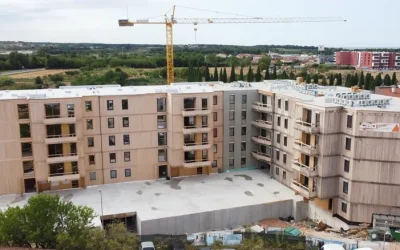
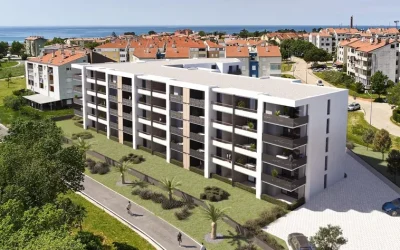
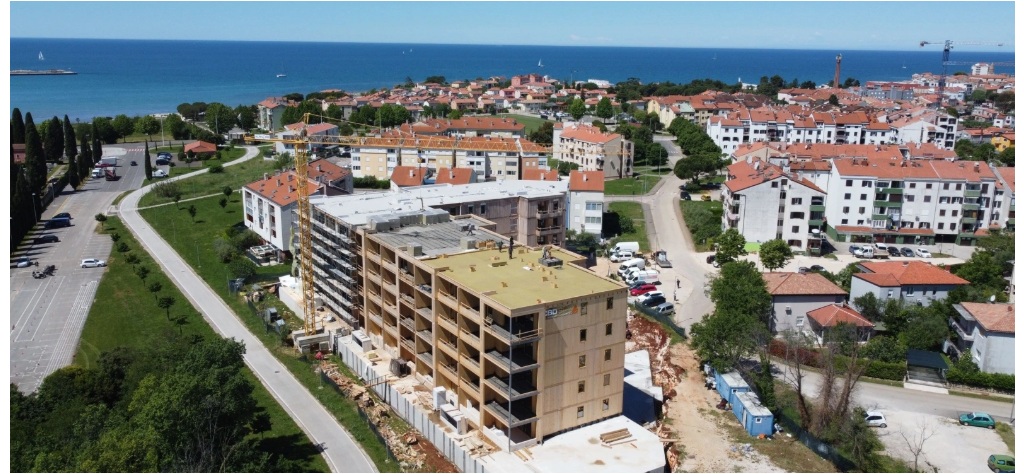
Residence Moela in Umag has therefore been designed not only as a modern new development close to the sea, but also as a project that places a more natural and environmentally friendly way of living at the forefront. At its core is timber construction, specifically cross-laminated mass timber construction, which combines a natural material, modern technology and the high standards of contemporary living.
Cross-laminated solid timber – tradition in a modern form
Wood is one of the oldest building materials, but its use in modern architecture now has little in common with the simple wooden structures of the past.
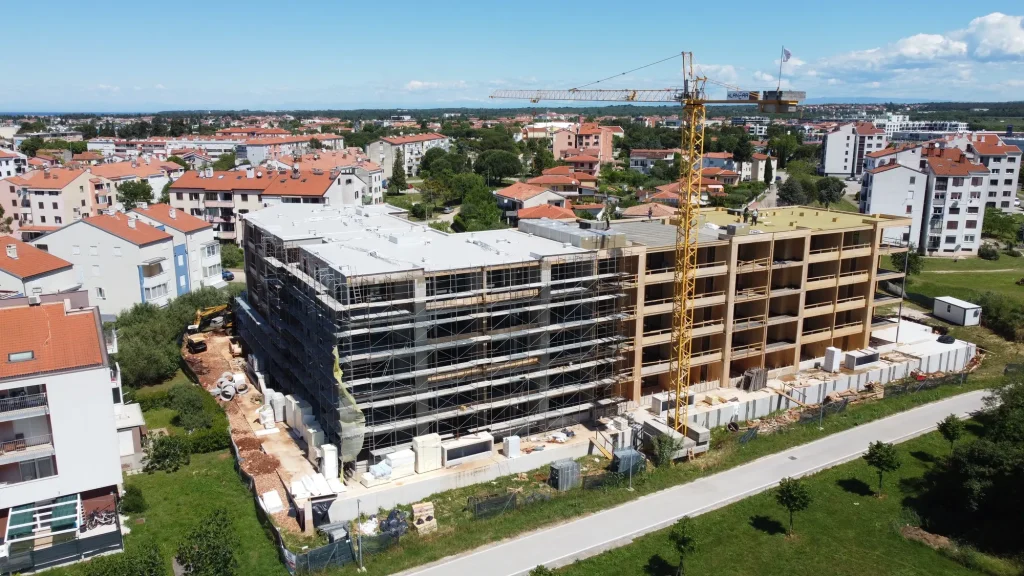
Cross-laminated timber, also known as CLT, is produced by bonding several layers of solid wood arranged perpendicular to one another. This creates large and stable structural elements suitable for walls, ceilings and other load-bearing parts of a building.
This technology enables timber construction to achieve high structural strength, precision and stability while preserving one of its most important qualities – a direct connection with nature.
Cross-laminated mass timber construction therefore represents a carefully considered combination of a traditional material and advanced engineering expertise. The result is not merely a modern building, but a home whose fundamental structure creates a different living experience.
A more environmentally friendly alternative to conventional construction
The construction industry has a significant impact on the environment, which is why the choice of structural materials is becoming increasingly important. With appropriate planning, responsibly sourced wood and careful execution, timber construction can be considerably more environmentally friendly than conventional construction based primarily on concrete and steel.
Wood is a renewable material, and as trees grow, they absorb carbon dioxide from the atmosphere. This carbon remains stored in wooden products throughout their use in a building.
Comparative life-cycle analyses indicate that mass timber buildings can significantly reduce the impact of the construction phase on global warming compared with similar concrete buildings, provided that the materials are sourced and used responsibly.
Because large cross-laminated timber elements are manufactured precisely in a controlled environment, work on the construction site is also more organised. Assembly can be faster, the amount of construction waste can be reduced, and the surrounding area is generally less affected by noise, dust and lengthy wet construction processes.
Timber construction is therefore not merely an architectural decision. It is a decision to use resources responsibly and to adopt a construction method that looks beyond the moment when the building is completed.
Timber construction that breathes with life
We often say that a wooden house or timber building “breathes”. This does not mean that the structure replaces appropriate ventilation, but rather refers to the properties of a natural material that responds to changes in the environment and helps create a more pleasant atmosphere indoors.
Wood brings warmth, softness and a natural character into an interior that artificial materials struggle to replicate. The spaces do not feel cold or detached, but instead create a sense of homeliness and connection with the surrounding environment.
The best form of construction is not intended merely to provide protection from the outside world. It should also allow people to feel comfortable in their own homes. When people connect with nature, the way they experience a space also changes. The home becomes a place of calm, regeneration and a higher-quality everyday life.
This is precisely why cross-laminated mass timber construction is more than a structural system. It provides the foundation for a way of living that is closer to nature and better aligned with contemporary human needs.
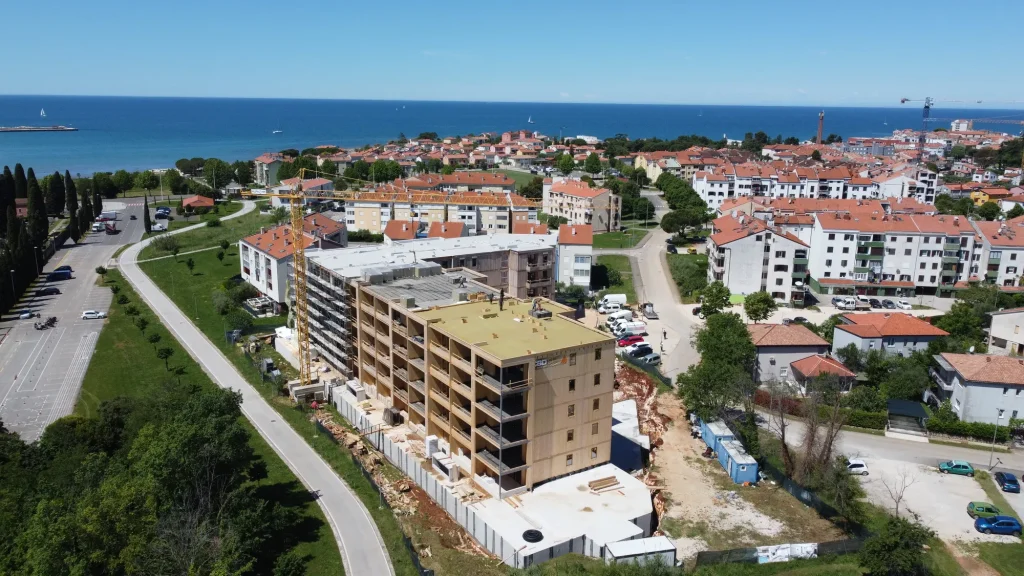
Residence Moela – more than a place by the sea
Residence Moela is being developed in an exceptional location in Umag, close to the town centre and approximately 200 metres from the beach. The project includes modern one-, two- and three-bedroom apartments, terraces overlooking the sea or inland, parking spaces in the garage, and bright, functionally arranged living areas. The apartments are designed to achieve an A+ energy rating.
Large glass surfaces connect the interior with the surrounding environment, while spacious terraces allow residents to make the Mediterranean lifestyle part of their everyday lives. The proximity of the sea, the town centre, the sports park, shops and other important infrastructure further enhances the quality of the location.
However, Residence Moela is not exceptional solely because of its outstanding location. Its true value lies in the way it has been designed and constructed. The building is constructed from cross-laminated timber, or CLT, a modern construction material that provides a high level of living comfort, excellent energy efficiency, and a sustainable and more environmentally friendly form of construction. As the first project of its kind in this area, Residence Moela is setting new standards for modern living.
A common misconception is that timber construction presents a greater fire risk. In fact, the opposite is true – because of its structure and predictable behaviour in a fire, solid cross-laminated timber achieves a very high level of fire safety. When exposed to fire, a protective charred layer forms on the surface of the wood, slowing the spread of the fire and protecting the load-bearing structure. This type of construction therefore complies with the strictest fire-safety standards and represents a safe and reliable solution for modern living.
The construction of the future begins today
Modern architecture is no longer concerned solely with finding ways to build more and build faster. It seeks ways to build better – with less impact on the environment, greater respect for natural resources and consideration for the people who will live in these spaces.
Timber construction is an important part of this development. Cross-laminated mass timber construction demonstrates that sustainability, safety, modern design and living comfort are not mutually exclusive, but can complement one another.
Residence Moela therefore represents a step towards an architecture in which people, homes and nature reconnect. It is a place where proximity to the sea meets the warmth of wood, and where a modern lifestyle is combined with a responsible attitude towards the environment.
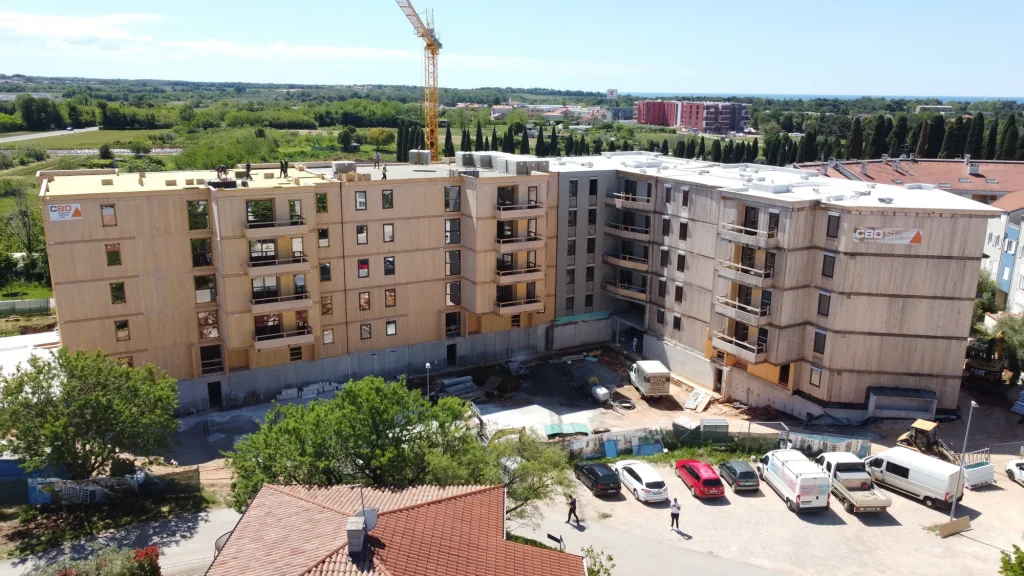
This is more than a new development. This is the construction of the future.
For more information, contact us.